
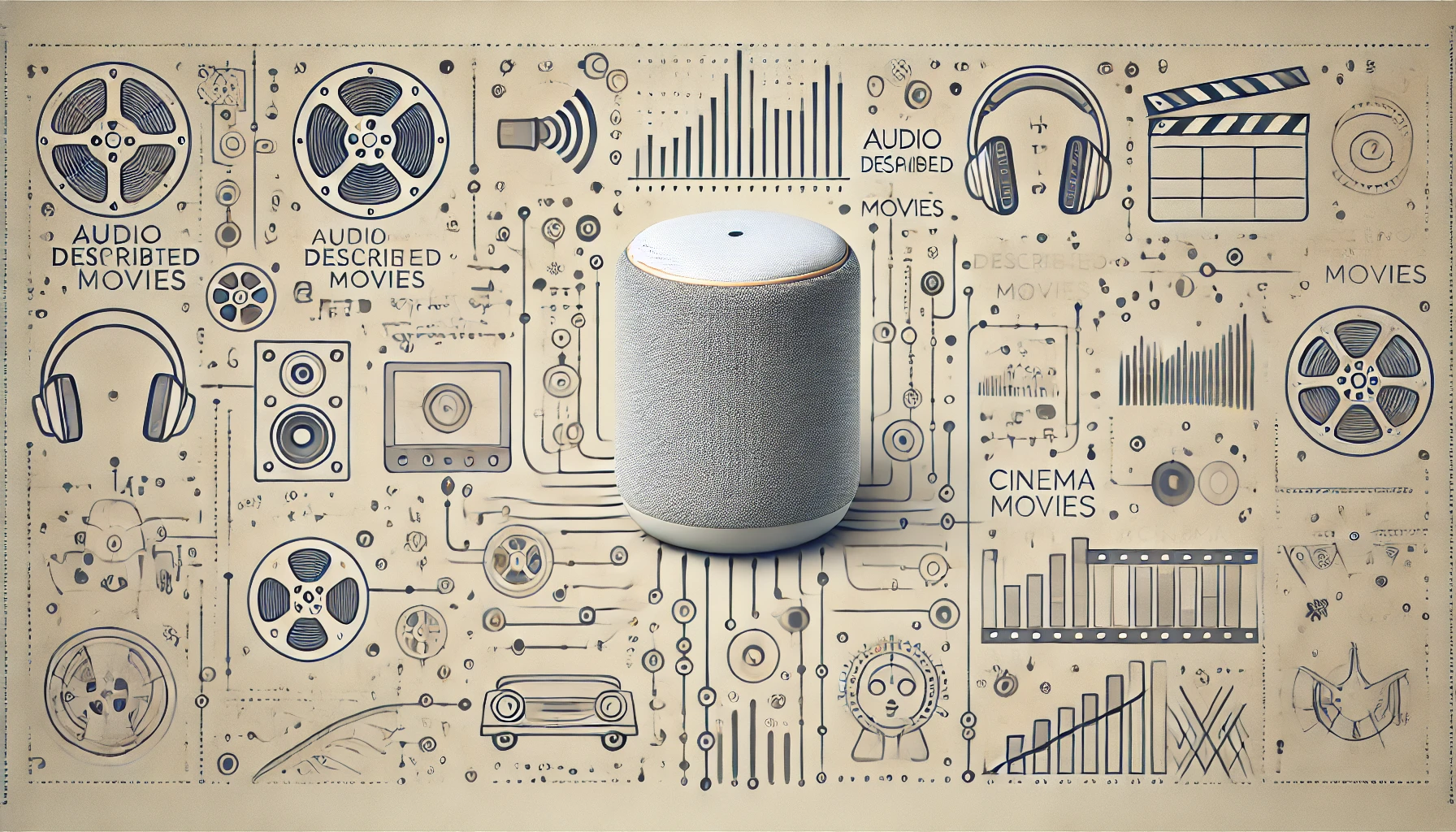
Mindgeist creates a voice solution for Audesc that lets users easily discover and access audio-described films, solving accessibility problems and complex navigation.
Key points
- Integration of audio-described content databases.
- Development of conversational flows for content selection.
- Metadata management for advanced, contextual searches.
- Compatibility with accessible players for users with visual disabilities.
- Scalable solution to integrate new categories and audiovisual services.
Access to Audio-Described Audiovisual Content
Audio description lets people with visual disabilities enjoy audiovisual content, but accessing these films remains a challenge. Disorganized databases, complex navigation and unintuitive systems limit the user experience.
Mindgeist worked with ONCE to develop a voice interaction solution that solves these problems, making audio-described films easily accessible through simple commands.
Solution Implemented
Integration of Audio-Described Content Databases
Querying the film catalogs in a unified database:
- Metadata Standardization:
- Titles, genres, descriptions and audio description data were structured in a model compatible with voice queries.
Conversational Flows for Film Selection
Users need to run complex searches using descriptions or non-literal names:
- Contextual Search:
- Implementation of search by title or category.
- Personalized Recommendations:
- Based on genres or user preferences, the system offers relevant content.
Compatibility with Accessible Players
The solution includes integration for playback on Alexa devices:
- Simple Playback Flows:
- Intuitive commands to start, pause or resume films.
- Audio and Visual Feedback:
- Clear responses during navigation and playback.
Impact of the Solution
- Improved Accessibility:
- Users can now find and play audio-described content with simple commands, removing navigation barriers.
- Increased Use of the Service:
- Adoption of the platform extended its use to Alexa thanks to its ease of use.
- Efficient Management:
- Automating updates reduces the time spent on manual catalog management.
Democratizing Access to Audiovisual Content
The Audesc case highlights how voice technology can transform accessibility in the audiovisual field. Mindgeist applied its experience in data integration and interaction design to deliver a solution that not only solves problems but expands the possibilities for users with specific needs.
Want to explore how these solutions can be integrated into your projects? Contact us for more details.
Learn More
Explore the Audesc skill directly on Alexa and discover how voice interaction transforms accessibility: